5-minute read
As a mission-driven organization, you are fueled by a cause. You have a purpose and a “why” that drives you to create products or services that will make a difference in people’s lives. But is your mission statement enough to guide your organization toward success?
It’s common for mission-driven brands to focus so much on their cause that they sometimes forget the importance of a solid strategy. In today’s competitive philanthropic market, having more than a compelling mission statement is required to guarantee success. You need a well-defined strategy to ensure you take the right steps to do everything within your power to reach, engage and impact those who can advocate for your mission.
So, what exactly is strategy?
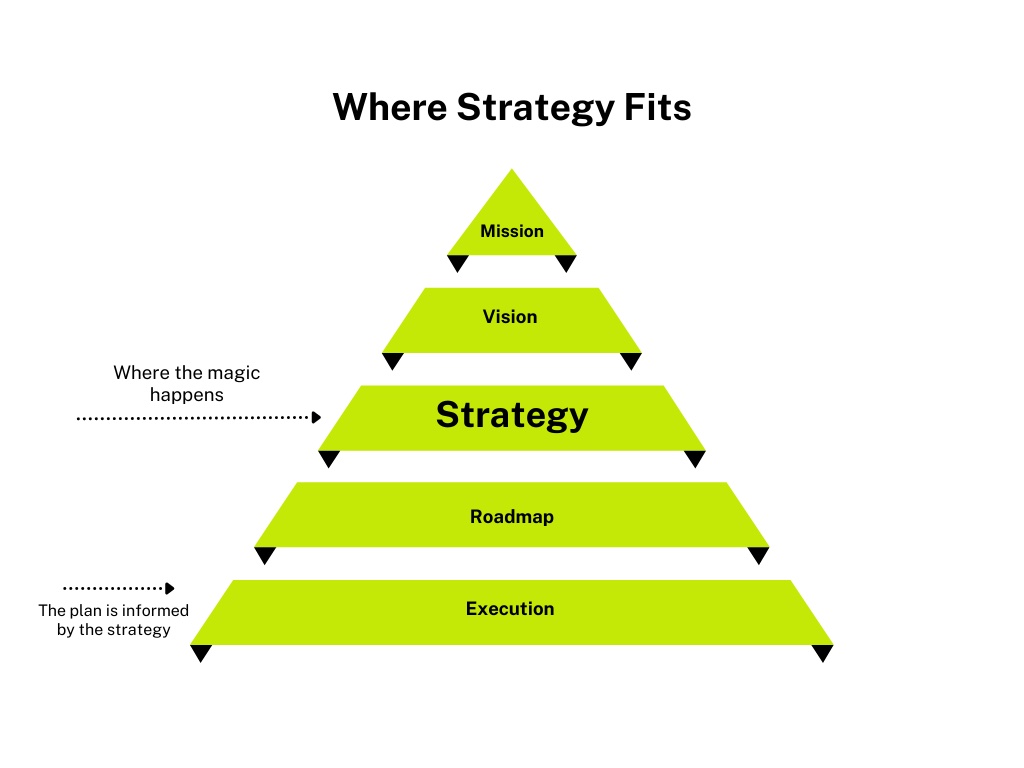
Strategy is about making specific choices on how to win in the marketplace. It applies to purpose-driven and for-profit businesses alike. It’s the space between your aspirations and outcomes. It’s the gap between your mission and vision statement and roadmap and execution.
It’s in the middle, but it’s a top priority.
We believe there is a misconception that planning is strategy. Planning and tactics are strategic elements, but they are not the same. A detailed plan specifying what an organization will do and when does not imply that its actions will add to a sustainable competitive advantage.
At the core of every good strategy is a competitive advantage.
What makes your conscious product or service unique? Why should your mission be chosen over your competitors? And make no mistake, you do have competitors.
No organization operates in a vacuum, and being aware of the competitive landscape is essential.
Competition and competitive advantage are conjoined twins. An organization deliberately creates a competitive advantage over its rivals by choosing different activities to deliver unique value. The advantage created involves choosing to do some things and not others and building a purpose-driven business or mission-driven organization around them.
Charity Water is an excellent example of this. Instead of developing one specific water solution, they are solution-agnostic. They consider existing water sources, terrain, and population when choosing a water solution. From household BioSand Filters to water systems stretching for miles, They work to ensure they are funding the most appropriate solution for each community.
Every good strategy considers and plans for its competition.
The average donor only has so much income. And when deciding to give, they evaluate and consider their options much like they would with non-mission-driven purchases.
|
Mission Driven Considerations |
Non-Mission Driven Considerations |
|
Which will make the most impact? |
Which is going to give me my money’s worth? |
|
Which is going to provide me with the most joy? |
Which is going to give me the most value? |
|
Are many people giving to them? |
Are many people using this? |
When a person gives to your organization, they take from another opportunity. A compelling cause does not absolve you from careful consideration when parting people from their hard-earned cash.
As a mission-driven brand, you need a solid strategy to ensure you take the right steps to reach your goals. By developing a defensible competitive advantage and properly positioning your organization against competitors, tangible or intangible, you build a strategy that enables you to dominate your market and make a difference in your customers’ lives.